
Your wedding ceremony will be the moment everyone has been waiting for. Picture this: the music is playing, guests have settled into their seats, and your wedding party is lined up at the top of the aisle. You’re about to walk toward the love of your life. You’ve likely imagined this moment for years.
That’s why so much care and thought goes into every wedding ceremony. Decisions like “What vows do we say?” “What rituals do we include?” and “Who should officiate?” can feel overwhelming. If you’re searching for unique wedding ceremony ideas, you’ve come to the right place.
Planning your ceremony is deeply personal. It should reflect who you are as a couple. Most ceremonies follow a similar format, so understanding the traditional order is a great starting point. Once you know the structure, you can weave in your own personalities and preferences.
A wedding ceremony typically lasts between 20 and 30 minutes for a civil ceremony and up to an hour for a religious one.
Traditional Wedding Ceremony Order
A traditional ceremony is ideal if you prefer a classic celebration. Or, you can use it as a foundation to layer in creative, unique touches.
Seating and Groomsmen
About one hour before the ceremony begins, groomsmen arrive and escort guests to their seats. They seat grandparents and honored guests first, then the groom’s parents, and finally the bride’s mother.
Providing groomsmen with a written wedding ceremony placement guide at the rehearsal dinner helps the seating process run smoothly and on schedule.
The Processional
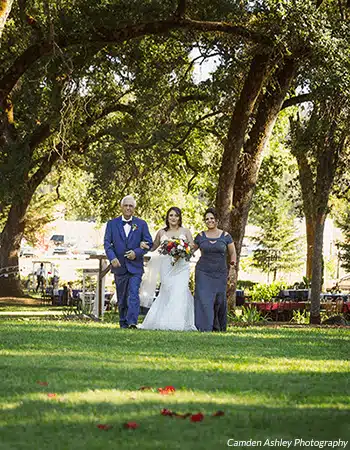
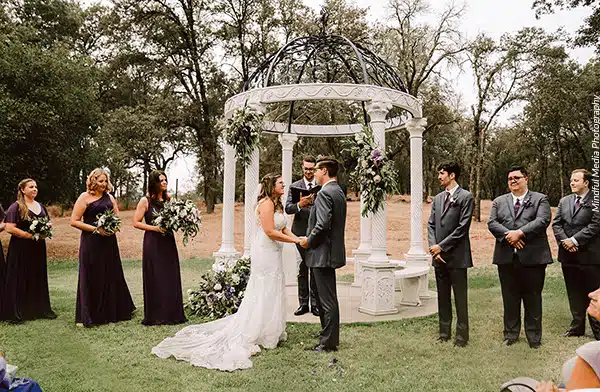
Once guests are seated, the groom and best man take their position at the altar. Groomsmen enter first, followed by bridesmaids, the maid of honor, and then the flower girl and ring bearer. The processional culminates with the bride’s entrance. Often, she’s accompanied by a parent (or both parents) as she walks down the aisle.
Words of Welcome
Your officiant welcomes guests, thanks them for bearing witness, and shares a few words about the meaning of marriage or your love story.
Readings
If you’ve chosen readings, guests invited to read approach the altar here. Some couples ask their officiant to introduce each reading; others prefer a natural flow between readers.
Officiant Addresses Couple
The officiant speaks directly to you both about the responsibilities and beauty of marriage and the significance of the vows you’re about to take.
Exchange of Vows
The vow exchange is widely considered the emotional heart of a wedding ceremony. It’s the moment when two people publicly commit their lives to each other. Whether you use traditional vows or write your own, this is the most personal and memorable part of your day.
Ring Exchange
After vows, you’ll place rings on each other’s fingers. Wedding rings are a circular symbol with no beginning or end, traditionally representing an unbroken commitment. Many couples choose to say a brief personal statement before placing the ring on their partner’s finger.
The Kiss
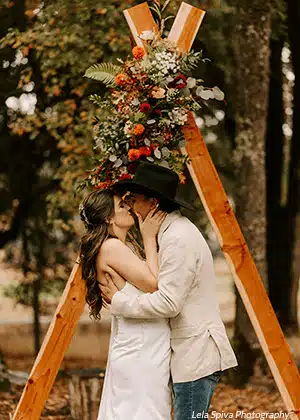
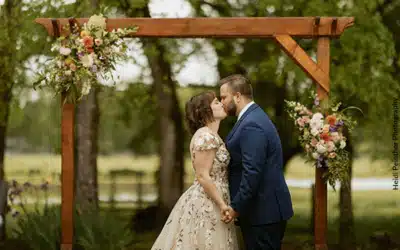
You seal your marriage with your first kiss as a married couple. Ask your officiant to step slightly aside beforehand so you’re not photo-bombed at the altar!
Unity Ceremony (Optional)
A unity ritual is typically performed after the kiss. Popular unity ceremony options include the unity candle, sand ceremony, handfasting, and the lasso ceremony, each symbolizing two lives joining into one. The right moment to incorporate it is immediately after the kiss, before closing statements.
Closing Statements
A final prayer, blessing, poem, or words of encouragement from your officiant. Religious ceremonies typically include a closing prayer similar to a final blessing after a church service.
The Recessional
Your officiant introduces you as a married couple for the first time. You walk back down the aisle together, followed by your wedding party in reverse processional order, as your guests cheer.
Unique Wedding Ceremony Ideas
Now for the fun part. With the traditional structure as your canvas, here are creative, personal, and meaningful ways to make your ceremony truly one of a kind.
- Music That Tells Your Story
Music sets the emotional tone for your entire ceremony. Three to four songs typically play during a wedding: prelude music while guests are seated, the processional, the bride’s entrance, and the recessional.
Your processional music doesn’t have to be traditional. Many couples choose a modern, non-traditional ceremony song that holds personal meaning, rather than defaulting to the classic Wedding March.
Talk to your DJ about your vision. They’ll have creative ideas and can transition seamlessly between songs regardless of track length. - Pre-Ceremony Wearable Favors
Surprise guests with wearable favors before the ceremony begins. One popular idea is having your florist create fresh-flower boutonnières and hair clips, then displaying them on trays at the entrance to the aisle for guests to pick up as they arrive. For themed weddings, wearable favors are an especially charming way to set the mood before a single word is spoken.
- Who Walks You Down the Aisle?
There are no rules here. Today, many couples reimagine the aisle walk entirely: both parents may escort a bride, partners may walk together, or a bride may choose to walk alone as a statement of independence and self-assurance. This is your moment to honor whoever has supported your journey.

- Fun for the Kids in Your Wedding Party
Give your flower girl a personalized sign or scroll to carry that reads something like “Just wait until you see her!” Set up a creative station where she can decorate it with crayons, stickers, and glitter while she waits. When she carries it down the aisle, it becomes a charming focal point.
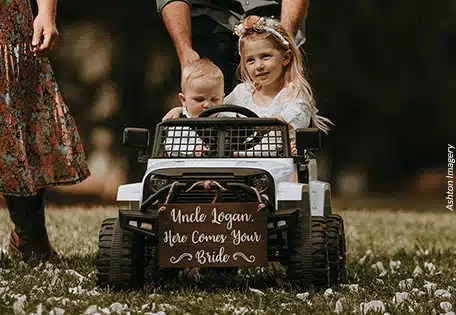
One memorable idea: have the ring bearer and flower girl make their entrance in a remote-controlled toy vehicle. We’ve hosted a wedding at Rough & Ready Vineyards where the pair rolled down the aisle in a remote-controlled Jeep with a sign reading, “Uncle Logan, here comes your bride.” The guests were delighted.
Also consider having ring bearers and flower girls take a seat in the front row after their entrance—it keeps them comfortable and prevents wiggles at the altar.. - Rituals and Cultural Traditions
Incorporating a cultural or heritage ritual into your ceremony is one of the most meaningful ways to honor your family history while creating a unique ceremony experience. Here are a few examples:
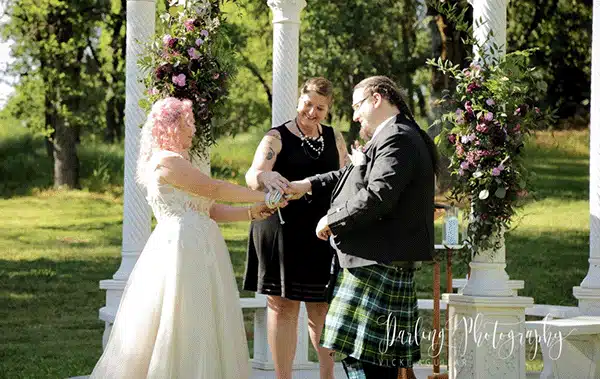
- Handfasting (Celtic/Irish tradition): The couple’s hands are bound together with ribbon or cord, symbolizing the “tying the knot.” An Irish fisherman’s knot specifically symbolizes a bond that grows stronger under pressure.
- Lasso Ceremony (Latin/Spanish tradition): After vows, a relative drapes two linked rosaries over the couple’s shoulders in a figure-eight shape, representing unity and protection.
- Unity Sand Ceremony: Each partner pours different-colored sand into a single vessel, creating a layered design that can never be separated—a beautiful keepsake.
- Unity Candle: Two individual candles are used to light a single larger candle, symbolizing two lives becoming one.
Research your own heritage for additional wedding ritual ideas that resonate with your story.

- Writing Your Own Vows
Writing personal vows is one of the most emotionally powerful unique wedding ceremony ideas. Personal vows allow couples to speak in their own voice, reference their real shared history, and make promises that are specific to their relationship, not a script someone else wrote. If you’re nervous about writing from scratch, use traditional vows as a starting point and revise them until they feel like you.
- A Creative Recessional Exit
Instead of traditional rice, consider giving guests sparklers, ribbon wands, bubbles, or flower petals to send you off in style. Your recessional sets the tone for the entire reception that follows. Choose your exit music with that energy in mind.
Pro Tips for Your Wedding Ceremony
Walking Down the Aisle
- Look up as you walk. Keep your gaze forward so your photographer can capture your expression.
- If guests arrive late, a five- to ten-minute buffer built into your wedding day timeline prevents the awkward moment of guests arriving mid-processional.
- Not everyone needs to walk. Groomsmen can seat family members before the processional begins.
Stance at the Altar
- Keep a slight bend in your knees. Never lock them out, especially in warm weather.
- Wedding party members stand at a 45-degree angle to face both the couple and the guests.
- Stand close together; it looks more natural in photos and from the audience.
Ring Exchange Tips
- Hold your partner’s hand while placing the ring on their finger.
- Confirm at rehearsal who is responsible for the rings and where they’ll be during the ceremony.
- Make sure your ring bearer knows exactly when to step forward.
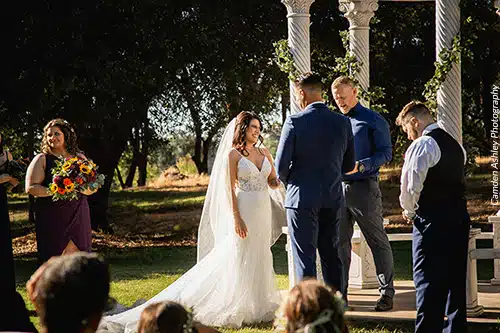
Photo Opportunities
- Pause at the end of the aisle after the recessional for a natural, joyful photo moment.
- Ask your officiant to step aside just before the kiss so they’re out of the frame.
- Linger in your first kiss, because a brief peck is hard to photograph beautifully.
- The “first look” is growing in popularity: the groom faces away from guests, and the officiant taps him on the shoulder to turn around just as the bride reaches the top of the aisle. This allows the photographer to capture a genuine, unscripted reaction.
Frequently Asked Questions About Unique Wedding Ceremony Ideas
What are the most popular unique wedding ceremony ideas right now?
The most popular unique ceremony ideas include writing personal vows, incorporating cultural heritage rituals like handfasting or the lasso ceremony, creative recessional exits with sparklers or ribbon wands, and personalized processional music. Outdoor vineyard ceremonies have also grown in popularity for their natural beauty.
How long should a wedding ceremony be?
Most civil wedding ceremonies last 20–30 minutes. Religious ceremonies, or those with readings and unity rituals, typically run 45 minutes to an hour. Adding rituals like a unity candle or sand ceremony adds 5–10 minutes.
Can we write our own wedding vows?
Yes! Writing personal vows is one of the most meaningful things a couple can do. Use traditional vows as a framework if you need a starting point, then personalize them with specific memories, promises, and your own words.
What is a unity ceremony?
A unity ceremony is a ritual performed during the wedding to symbolize two lives joining together. Common options include the unity candle, sand ceremony, handfasting (hand binding with ribbon or cord), and the lasso ceremony. It is typically performed after the exchange of rings and kiss.
What is handfasting?
Handfasting is a Celtic wedding ritual in which the couple’s hands are bound together with ribbon or cord—the origin of the phrase “tying the knot.” It symbolizes the couple’s voluntary union and the bond they are creating together.
What should guests throw or do during the recessional?
Popular recessional sendoff ideas include sparklers, ribbon wands, bubbles, flower petals, and lavender. Rice and birdseed are discouraged at many venues. Check with your venue on what is permitted.
Vineyard Wedding Ceremonies: A Perfect Setting for Unique Ideas
An outdoor vineyard wedding ceremony naturally lends itself to unique, personalized touches. The scenic backdrop of rolling vines and open sky eliminates the need for heavy décor, allowing your rituals, vows, and personalities to take center stage.
Rough & Ready Vineyards in Rough and Ready, California is nestled in the Sierra Nevada foothills of Nevada County. Couples have access to a breathtaking outdoor ceremony space surrounded by working vineyards. Outdoor weddings pair especially well with heritage rituals, outdoor unity ceremonies, and organic floral elements like wildflower hair clips and wreath bouquets.
Editor’s Note: This article was originally published on October 3, 2023, and has since been updated.
Mardie has been a successful businesswoman since 1981. The Rough & Ready Vineyards was created out of Mardie’s desire to contribute to the community. Mardie's vision to serve the community is rooted in her love of Nevada County, and it provided her with the opportunity to revitalize an old Ranch property into a breathtaking wedding venue.
Her innovative mind and commitment to environmental accountability contribute in a positive way to our community and the surrounding area. With the Rough & Ready Vineyards, Mardie seeks to create the best wedding experience for our clients and their guests, creating memories that will last for generations.

0 Comments